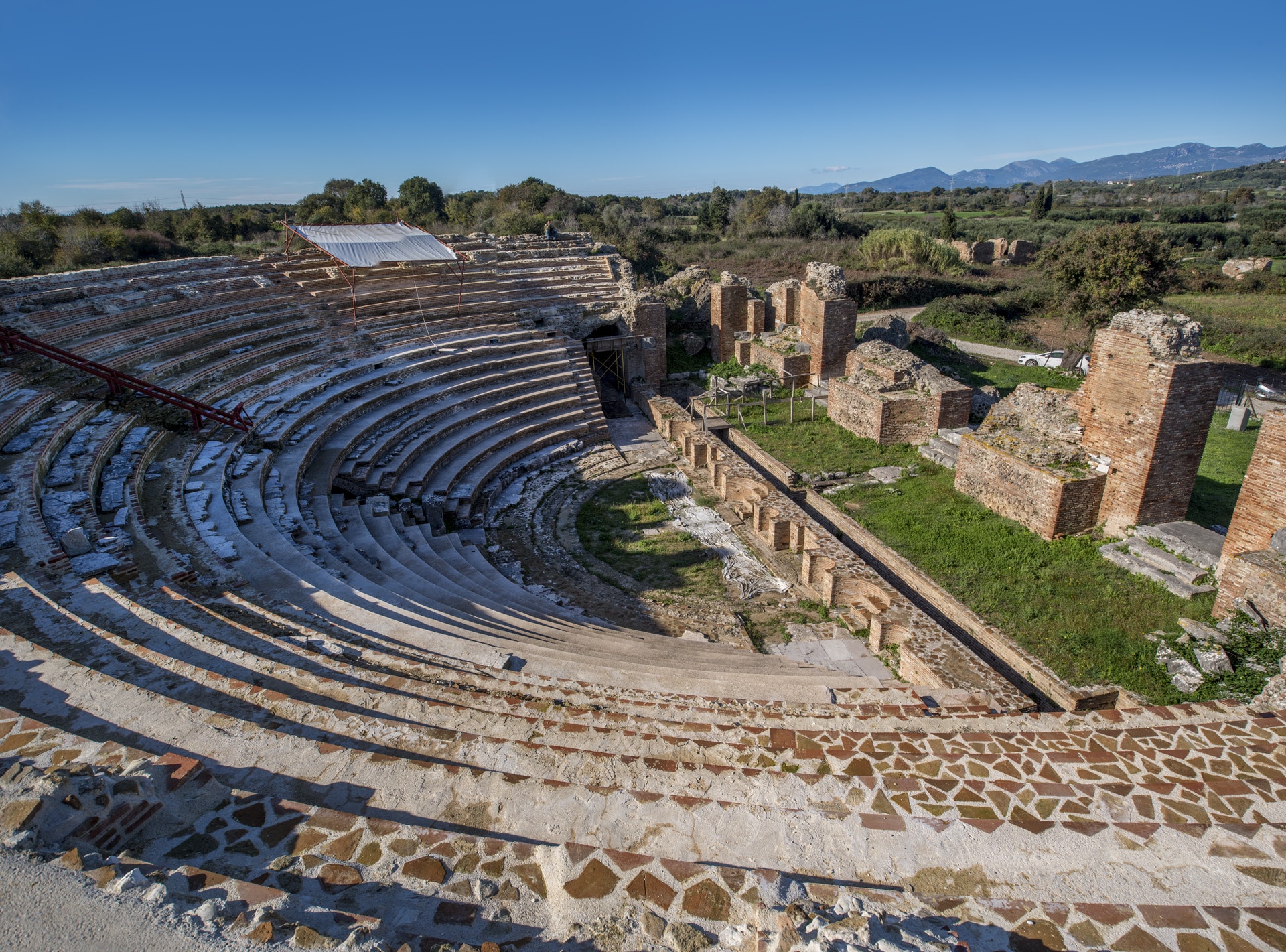
Odeon of Nicopolis

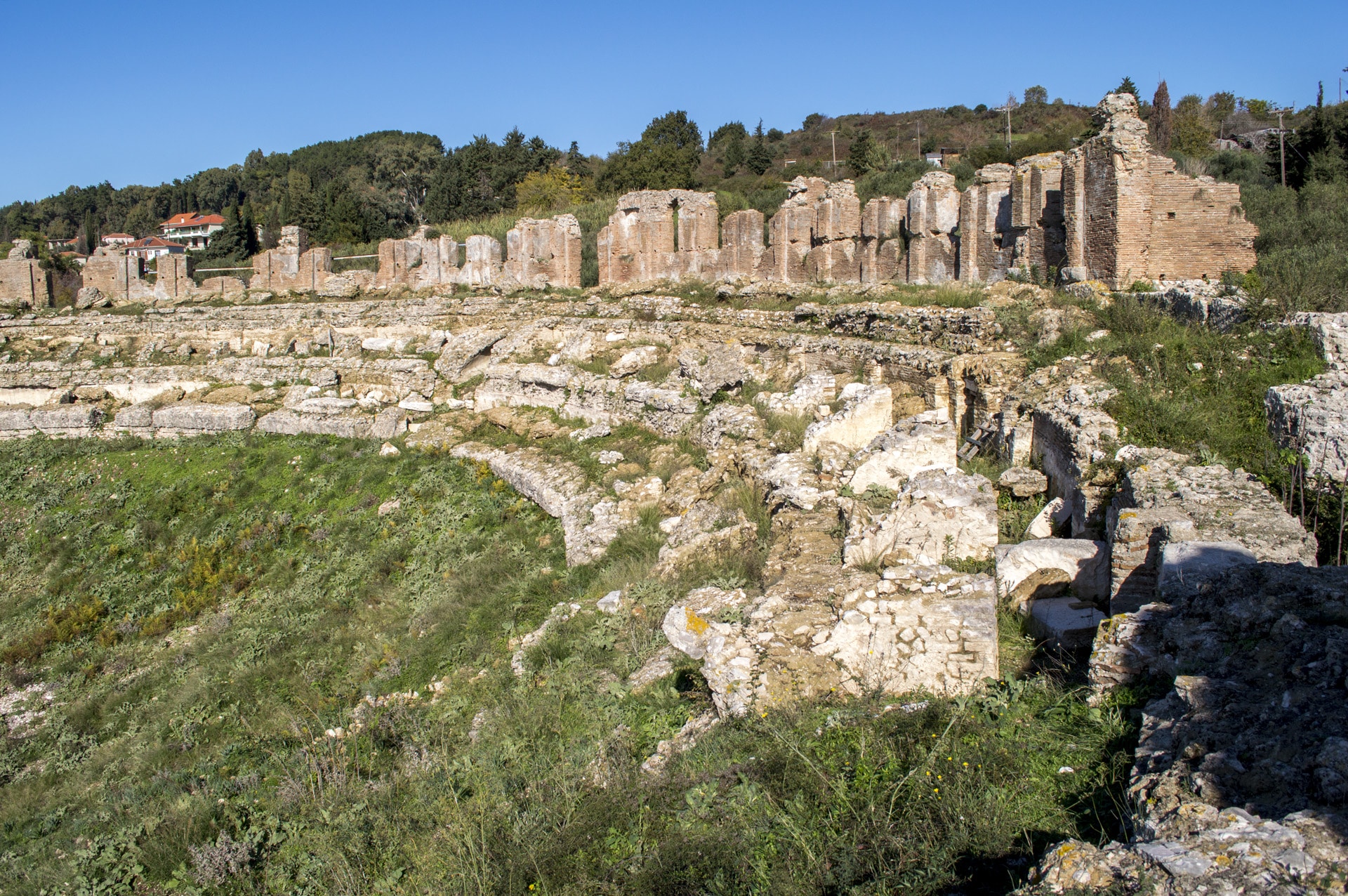
It is a true architectural masterpiece, by some unknown but great architect.

It lies in the center of the city, on the western side of the wall, adjacent to the Roman agora.

It was used for lectures, literary and musical contests and theatrical performances during the Nea Aktia religious games honouring Apollo.

It was built during the reign of Augustus (early 1st century AD) and frequently remodelled and repaired in the late 2nd – early 3rd centuries AD.

The Odeon consisted of the cavea, the orchestra and the scene.

The cavea contained 19 rows of seats and was divided into two sections by a small horizontal central corridor. On the tenth row of the seats, there were small openings in favour of acoustics.

Three semicircular porticos, of different heights, support the cavea and ensure its sloping tendency.

The semicircular orchestra was adorned with multicoloured marble works, parts of which are still preserved.

Between the scene proper and the proscenium there is a deep and narrow corridor. This is “the flute of the setting”, which served to raise the curtain at every theatrical performance.

Theatre of Nicopolis

It is an impressive building erected in the early 1st century AD, together with other public buildings in the city.

It operated mainly during the religious celebration of the Nea Aktia, in honor of Apollo.

Lists of winners in the Nea Aktia contests found in the temple of Apollo inform of competing poets, sophists, comedians, heralds, trumpeters, guitarists, announcers, pipers and mimes.

The theater was built on the slope of a hill and in an effort to increase protection from earthquakes, a high buttressed wall was built around the cavea.

A wide corridor called diazoma divided the cavea into two sections, the theater and the epitheatro. At the corridor’s edges were two large vaulted entrances.

The cave supported a peripheral portico probably sheltering spectators in case of a sudden storm.

Both the orchestra and the cavea were shaped as a regular semicircle.

There was a high, probably two-storey, scene (characteristic of the Roman architecture) with three arched entrances at the facade.

Monument of August

This is the monument – a trophy of the battle of Actium, which was erected by Octavian Augustus to commemorate his victory over Antony and Cleopatra.

Built in 28 BC over the hill of Michalitsi, in a position with a panoramic view, it towers over the archaeological site.

The sources mention that Octavian had set up his headquarters there on the eve of the maritime confrontation.

The monumental form of the building, its construction immediately after the battle of Actium, and the multiple symbolisms, with which it is charged, make it a characteristic example of the propaganda policy implemented by Octavian in the framework of his autocracy.

It was a shrine dedicated to the gods Apollo, Neptune and Mars, who stood by the Emperor August in his glorious victory, according to a relevant inscription.

The monument was constructed on an artificial terrace, whose front was adorned with the bronze pistons of the defeated fleet.

To the north side, there was a U-shaped gallery, open to the south, where the monumental altar with its exquisite relief, representing the triumph of August, was located.

Archaeological Museum of Arta

Located at a small distance from the famous bridge of the city, it is housed in a new building and was inaugurated in Autumn 2009.

It includes a great collection of ancient objects chronologically covering a big period, from the Paleolithic Age to the Roman times.

Most of the exhibits, the most significant ones, date back to the Classical times and originate from Amvrakia, a Corinthian settlement built in the same location with today’s Arta.

The exhibition includes vessels, coins, tombstones, figurines, jewelry, etc and is structured into three major sections.

The first section exhibits objects related to the public life of the residents of Amvrakia; the second includes exhibits from its ancient cemeteries; and the third is related to the residents’ private life.

Texts and other visual material accompany the exhibits giving important information about the ancient city.

Furthermore, of great interest are the educational programs of the Museum for the students so that they can better learn the local history.
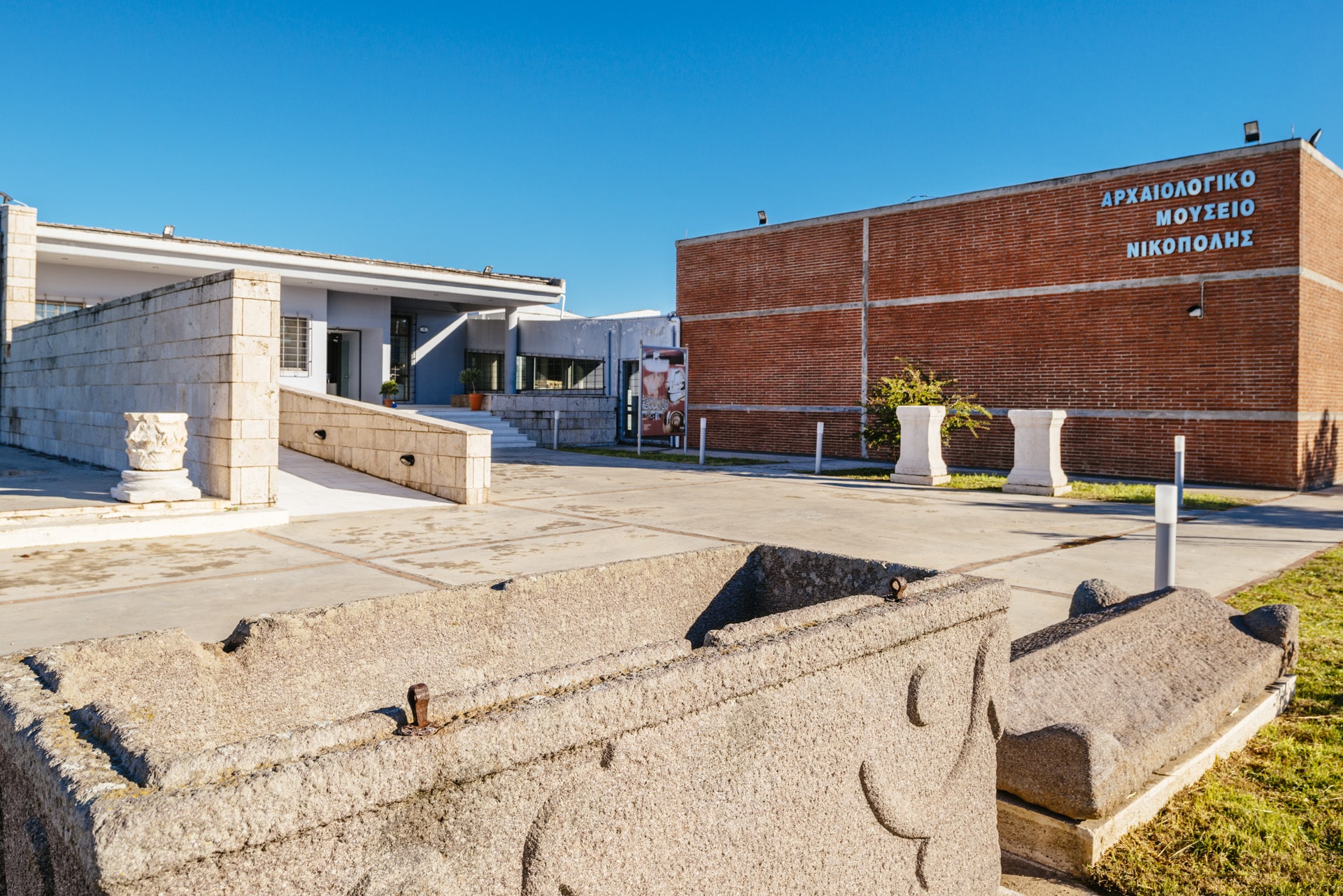
New Archaeological Museum of Nicopolis

The building of the new museum is located at the entrance of the town of Preveza.

The museum exhibition is exclusively based on the findings of the archaeological site of Nicopolis and not on the collection of a large area, which largely determines the central idea.

Therefore, one of the primary factors is the connection of the Exhibition and the Museum with the archaeological site of Nicopolis.

The visitor constantly bears in mind the picture of the area and in this way a better understanding of the exhibition is achieved, irrespective of whether the visit to the archaeological site occurs before or after.

In this framework, the majestic Roman Nicopolis is exhibited as the city-symbol of a monumental victory, established to showcase the power of Octavian Augustus.

At the same time, the early Christian city is presented, which has changed with the collapse of the Roman frontiers, the transfer of the capital of the Empire from the West to the East and the prevalence of Christianity; it is reformed during the Early Christian period and recovers its majestic nature, constituting a key religious and administrative center .

A museum that you should definitely visit.

The Historical Bridge of Arta

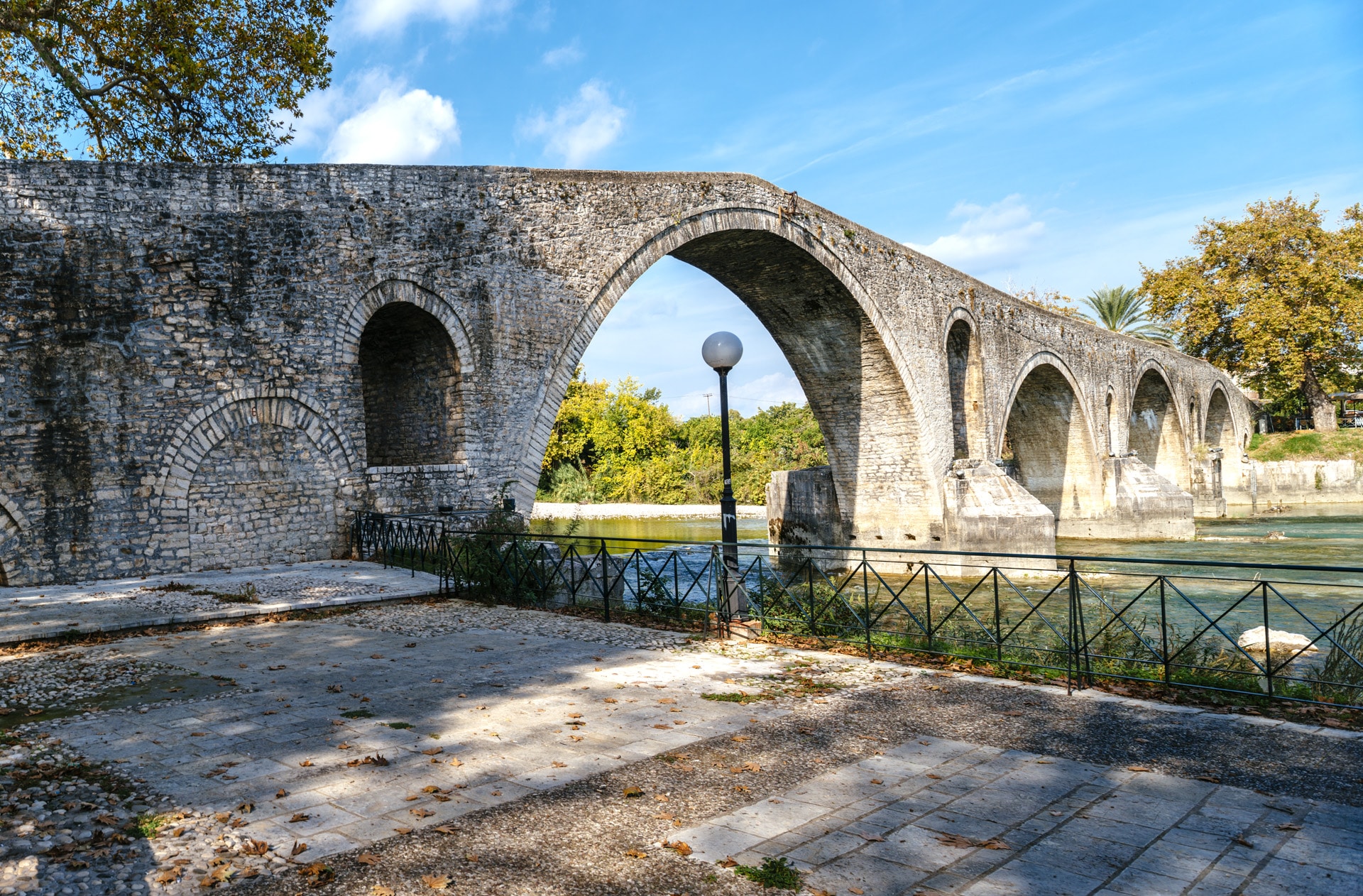
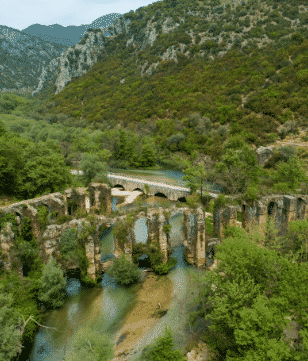
It is one of the most famous bridges of Epirus. It consists of four large semicircular arches supported by large abutments over which dominate the vaults. Its width is 3.75 m and its length 145 m.

According to the tradition, the bridge was built in the early 17th century by the Artan Giannis Thiakogiannis.

The Turkish traveler Evliya Tzelempi mentions that the bridge was built by Faik Pasha during the 15th century.

The variations observed in the masonry comprise evidence that the bridge was not originally built in the 17th century, but was repaired several times during the Turkish occupation.

The abutments of the bridge most probably date back to the classical or Hellenistic times.

The roughness of the river, the soft soil and the particular requirements of the construction should have posed many difficulties in the foundation of the bridge, and the repairs that followed.

These difficulties, combined with the fear of the people for the elements of nature, created the famous legend of the mason’s wife who had to be sacrificed for the bridge to be strengthened.

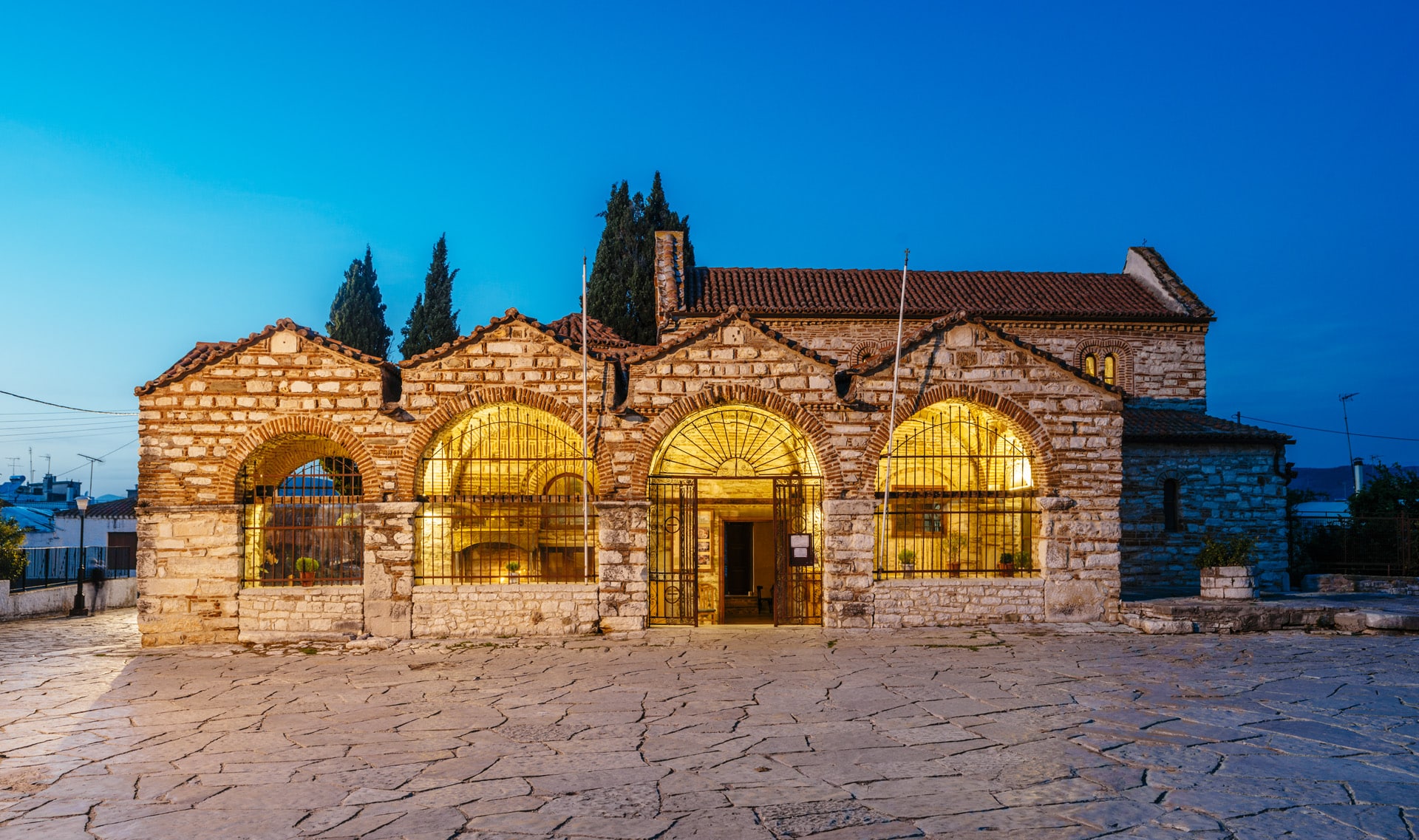
Panagia Vlachernon

It is located in the village of Vlaherna, opposite Arta, and took its name from the famous Panagia of Vlahernae in Constantinople.

It was founded at the end of the 11th century and remodeled in the mid 13th century by Michael II Komnenos Doukas.

Another jewel of the glory and religiousness of the sedulous Christians of Byzantine Arta.

On the outside of course, the church does not reach the grandeur or decorative elegance of Agios Vasileios, but it has its own distinctive elements that make it, if not grandiose, nevertheless impressive.

In the inside, time but also the unsuccessful human interventions have left their marks everywhere, so that it has lost a significant part of its old splendor.

Near the western corners of the main church, there are two simple cist graves, which are the special feature of the monument.

Today it serves as a parish church of the village, after which it was named.
Castle of Arta

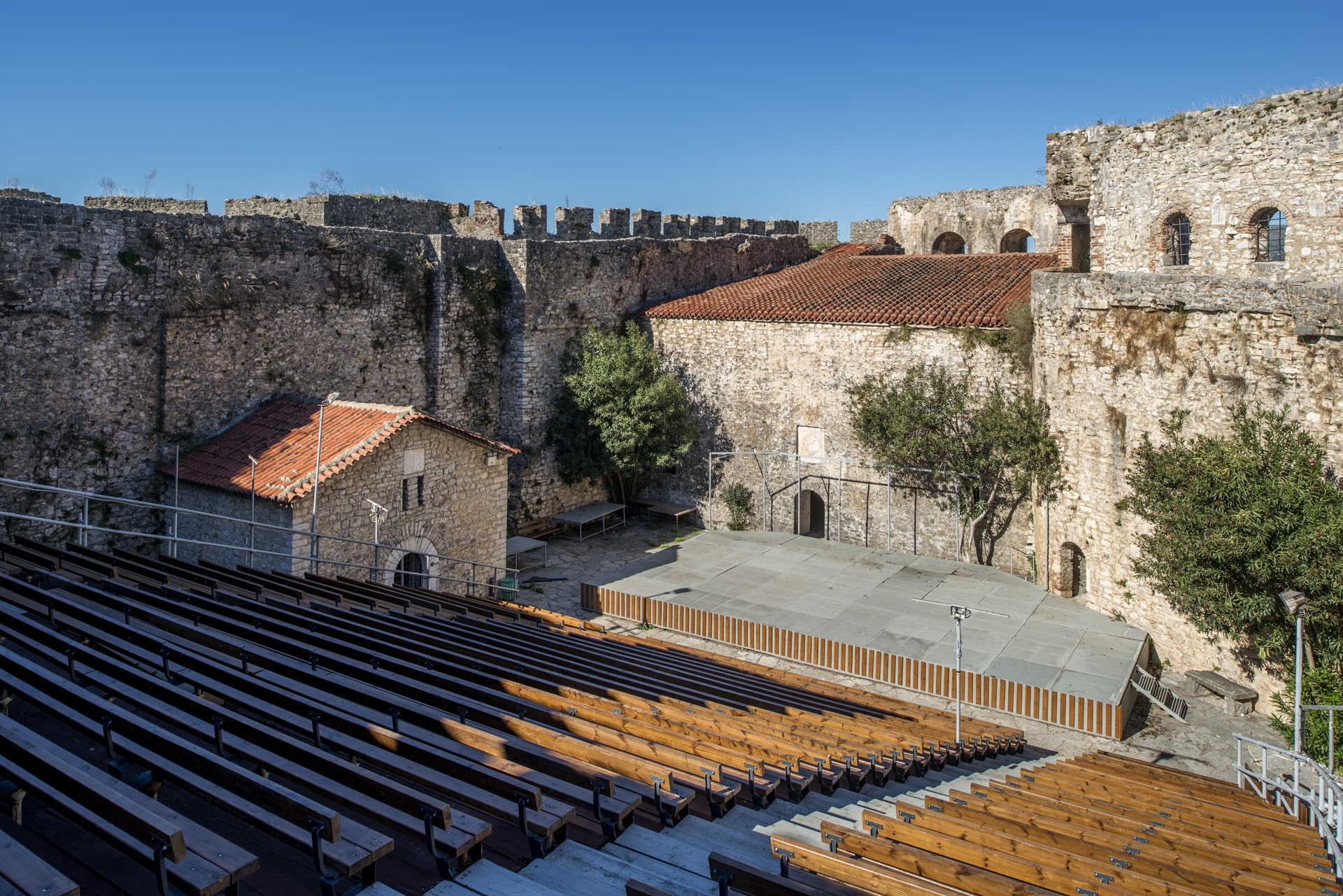
Built by Michael II, Despot of Epirus, in the 13th century, the castle of Arta preserved in an excellent condition, is a representative example of the secular architecture of the Byzantine period and the medieval character of Arta.

It is one of the major attractions of the area. It is the crown of the lower city, the most beautiful corner of today’s Arta.

Nothing more idyllic for the afternoon walker or the foreign visitor than being in the picturesque embrace of the castle, walk around the path of the warriors, stand in a tower and enjoy the panoramic view.

The small hill on which it is built was also considered a strategic location by the ancient Amvrakiotes, so apart from the fortress of the citadel on Peranthi hill, they also surrounded the lower city with a wall passing along the banks of the Arachtos river.

The huge clock tower in front of the castle was built during the Turkish occupation (1875) with much sensitivity so as to seem as a natural extension of the wall.

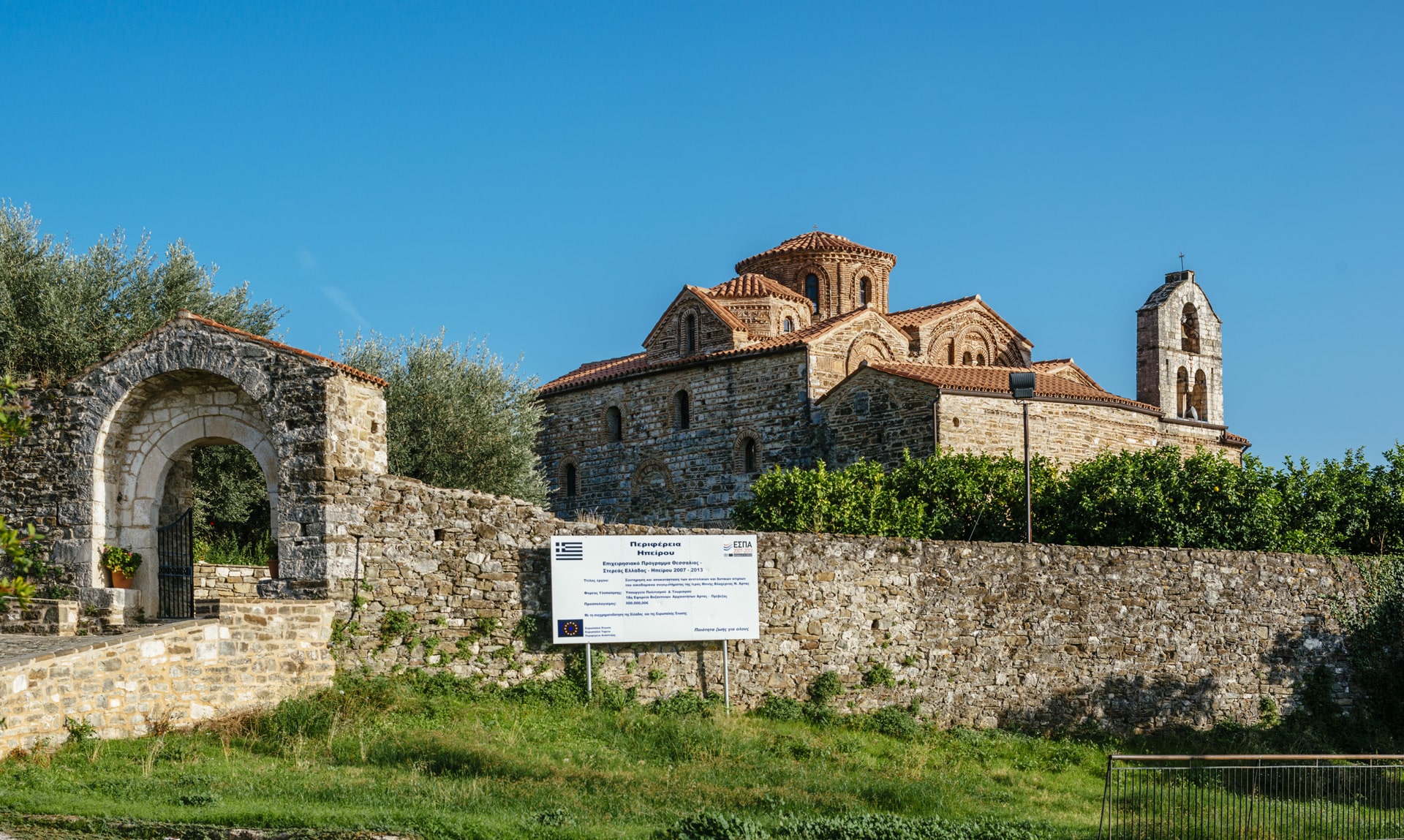
Church of Agia Theodora

The church of the patron saint of Arta and a pillar are the only salvaged parts of the monastery founded in the 13thcentury by the queen of the Despotate, Theodora.

It was founded in honor of St. George and functioned as a convent for nuns.

After the death of her husband, Theodora lived as a nun in the monastery, was buried there and the church is dedicated to her name.

This temple is the most “live” connection of today’s Arta with the Byzantine Arta, since apart from the building, we have the “presence” of the Queen of the Despotate herself, the patron Saint Theodora.

In the interior, the church retains much from its old sculptured and written decoration.

To the left of the southern entrance lies the tomb of Saint Theodora. The tomb retains its old position but not its original form. It was remodelled in 1873 when the translation of the relics of the Saint occurred and it was then that its present appearance.

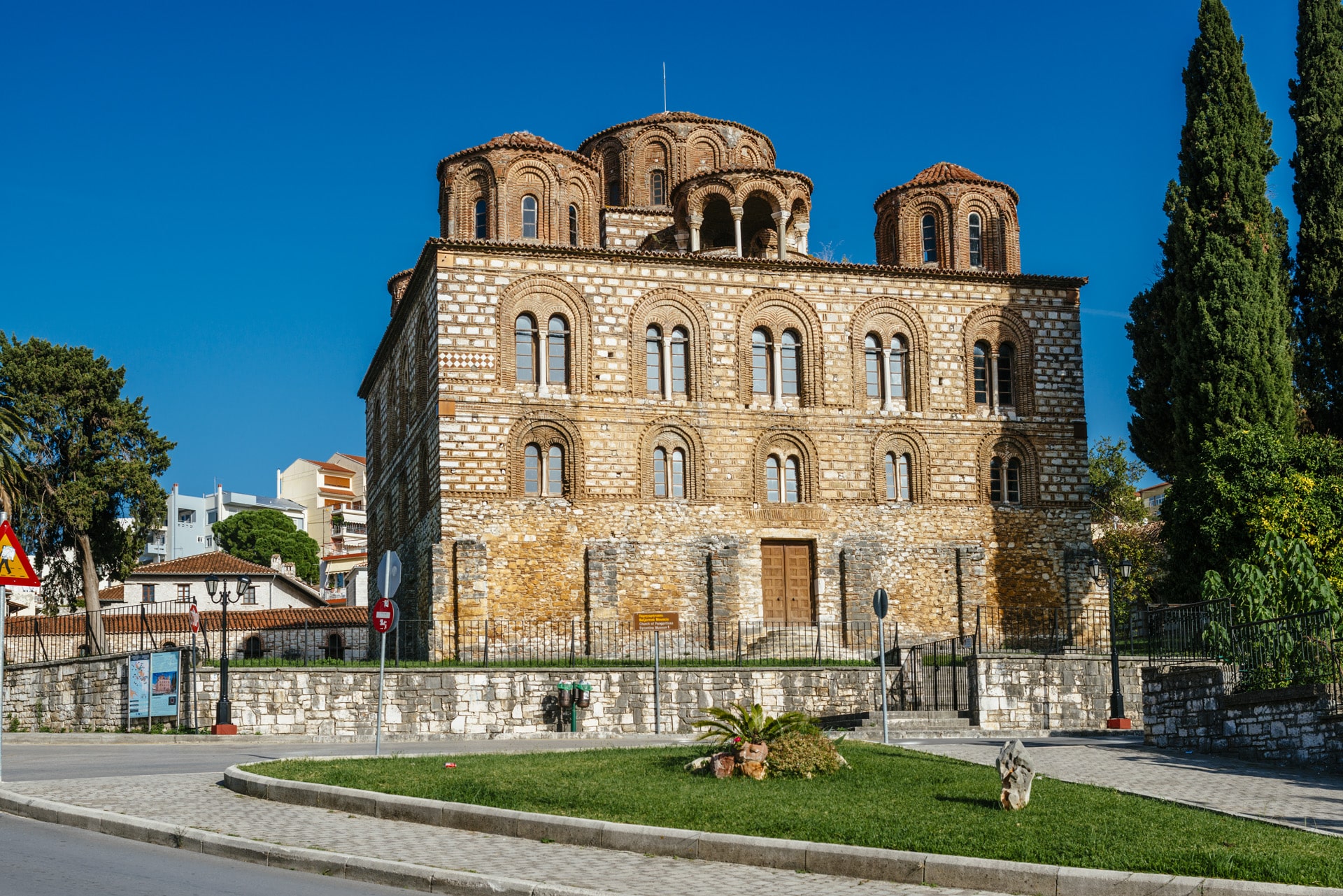
Panagia Parigoritissa (of Consolation)

13th-century building founded by Nikephoros I Komnenos Doukas and his wife Anna Palaiologina Katakouzene

It is the “lady” of today’s Arta, the jewel of the once glorious capital of the Despotate of Epirus.

It dominates over the densely populated slope of Peranthi hill, with its imposing presence being a reminder of the grandeur of Byzantine Arta.

Today only the church, the Altar and 16 cells survive from the stavropegial monastery

The church impresses with its external and internal architectural innovations, while the way of supporting the central dome, where the mosaic of the Pantocrator is preserved, is unique in ecclesiastical architecture.

It is a unique example of Byzantine church architecture around the Orthodox Christian world.

The many damages contributed to the church losing a big part of its old internal splendour, but its imposing grandeur has been preserved.

Search